

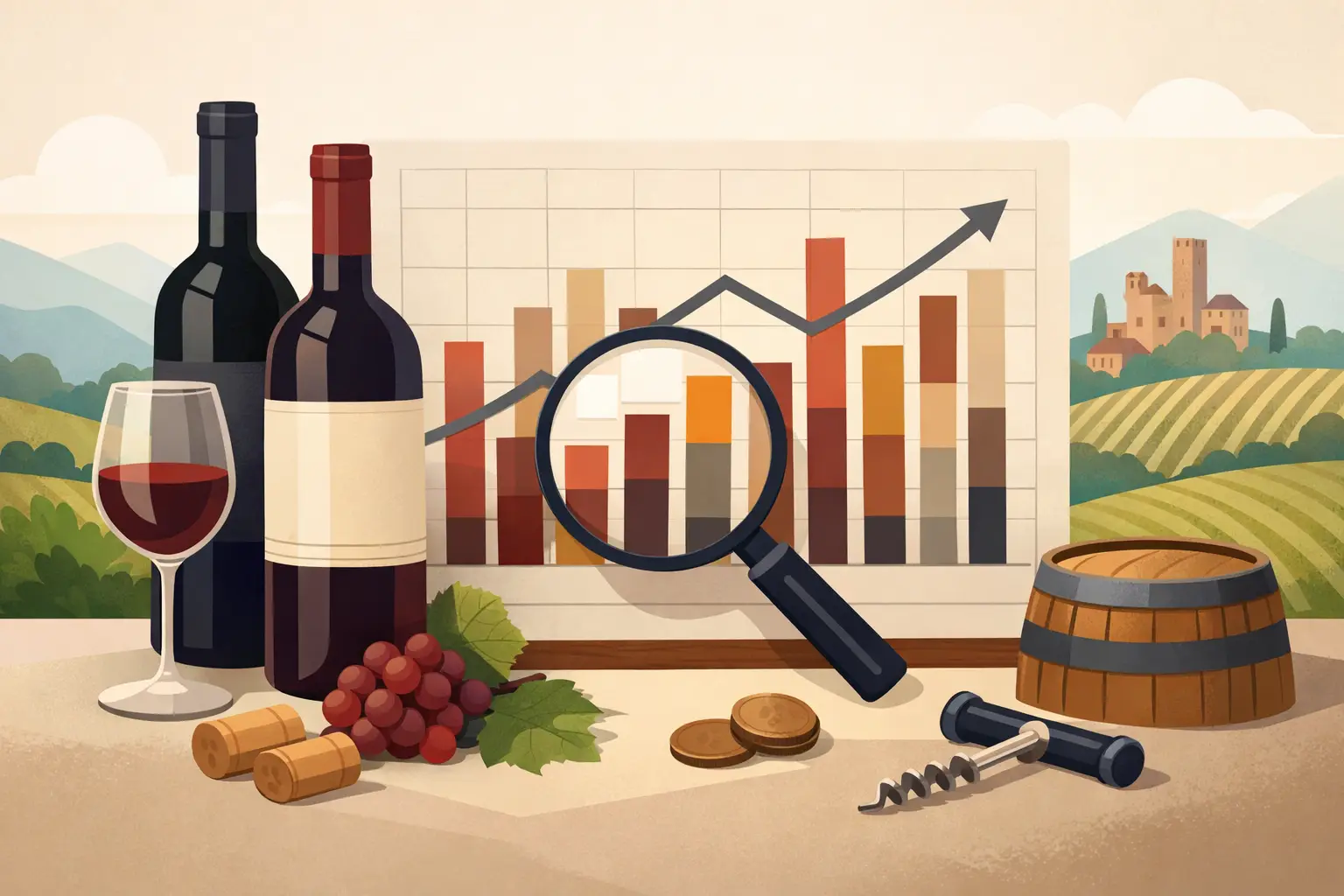
A Barolo vintage chart review can be useful, but it should never be mistaken for the final word on a bottle. Barolo is not made from a single landscape. It is born across a wide denomination of hills, exposures, altitudes and soils, then shaped by the choices of individual growers. A celebrated year may produce magnificent, long-lived wines throughout the region. Yet in a more difficult season, a well-sited vineyard and a patient hand in the cellar can produce bottles of unusual distinction.
For collectors, the chart is best read as a first orientation. It indicates the character of a growing season and the likely evolution of the wines. The estate, cru and storage history tell the rest of the story.
What a Barolo Vintage Chart Can Tell You
Nebbiolo is a demanding variety. It needs a long season to develop its perfume, tannin and fine acidity, and it responds vividly to changes in rainfall, temperature and harvest conditions. This sensitivity is precisely why Barolo carries such a clear sense of year.
A vintage chart usually assesses balance, concentration, ageing potential and consistency across the denomination. In warm, dry years, Barolo may offer generous fruit, supple tannins and earlier appeal. Cooler or more classically paced seasons can bring greater tension, fragrance and reserve. The finest years unite ripeness with freshness, depth with precision, and often require patience.
What a chart cannot reliably tell you is how one hillside performed against another. Monforte d’Alba, with its elevations and varied exposures, may retain freshness in a warm year. A site with a favourable aspect and well-draining soil can also be better placed to meet a wet late season than a broader regional score suggests.
Barolo Vintage Chart Review: The Important Recent Years
The following years deserve attention, not as a league table but as distinct expressions of Barolo. A collector building a cellar will find value in owning more than one style of vintage. Variation is part of the pleasure.
2010: Structure and classical poise
2010 is widely regarded as a benchmark modern Barolo vintage. The wines tend to combine ripe fruit with vivid acidity and firm, finely shaped tannins. There is perfume, energy and considerable reserve. At maturity, the best bottles offer the complexity collectors seek: rose, dried herbs, tar, sweet spice and the savoury detail that only time can reveal.
This is a year for the patient cellar. It remains especially compelling from serious sites and in traditional, restrained interpretations. Decanting is valuable for bottles opened now, although the finest examples have further distance to travel.
2013: Fragrant, precise and quietly enduring
The 2013 vintage produced Barolo of freshness and detail. It is less immediately broad than the richest solar years, but this is part of its appeal. The wines often show clear red fruit, floral lift and a taut line of acidity beneath their tannic frame.
For those who value transparency of site, 2013 can be deeply rewarding. It has the temperament of a classical vintage and, in strong hands, the capacity for graceful development. It is a fine choice for drinkers who prefer elegance over sheer volume.
2015: Generous fruit, serious foundations
Warmth and favourable conditions gave 2015 an open, generous profile, yet the best Barolos retain enough freshness to avoid heaviness. The vintage is often expressive in youth, with ripe cherry and plum fruit, warm spice and polished tannins.
That accessibility should not be confused with simplicity. The leading crus have concentration and depth, and they will reward further ageing. For a collector, 2015 can be a useful bridge between immediate enjoyment and long-term cellaring, particularly when selecting bottles from elevated or naturally fresh sites.
2016: Depth, balance and long horizons
Many merchants and critics regard 2016 as one of the great Barolo vintages of the period. Its strength lies in harmony. The wines generally possess deep fruit, aromatic complexity, energetic acidity and substantial tannins, without one element overwhelming the others.
The finest 2016s are not wines to rush. Their power is controlled rather than showy, and their evolution is likely to be slow. Collectors seeking a reference point for a serious Barolo cellar should consider this vintage carefully, while recognising that its reputation has made provenance and producer selection all the more important.
2019: Freshness with authority
2019 returned to a more measured, classically framed style after the warmer conditions of some preceding years. It is a vintage of balance, with aromatic clarity, ripe but not excessive fruit and a composed tannic structure. Many wines possess an early sense of completeness while keeping their future firmly in view.
This is a year worth following across communes and crus. It offers the kind of proportion that allows vineyard character to speak clearly. The best examples should develop beautifully over the next two decades and beyond.
2020: Earlier charm, thoughtful selection
The 2020 growing season gave wines that can be generous and attractive in their youth, often with supple texture and expressive fruit. In a warmer year, site becomes especially significant. Altitude, canopy management, harvesting decisions and restraint in the cellar all influence whether a wine retains the lift that makes Barolo unmistakable.
There are excellent bottles in 2020, particularly from estates with exacting vineyard work and a clear understanding of their parcels. The vintage may offer earlier drinking than 2016 or 2019, but the strongest examples should not be underestimated. Buy by producer and vineyard rather than relying on a regional headline alone.
2021: Energy and promise
The 2021 vintage has attracted considerable attention for its combination of ripe fruit, freshness and tannic precision. It is still early to make definitive judgments about every bottling, but the initial impression is of wines with brightness, definition and impressive structure.
For collectors, 2021 is a vintage to secure from trusted estates and then leave undisturbed. Its quality will be revealed over time, as Barolo’s stern youth gives way to nuance and perfume.
Why Cru and Producer Matter More Than a Score
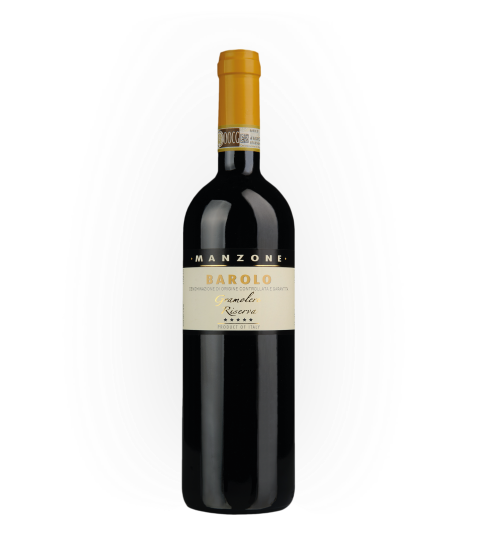
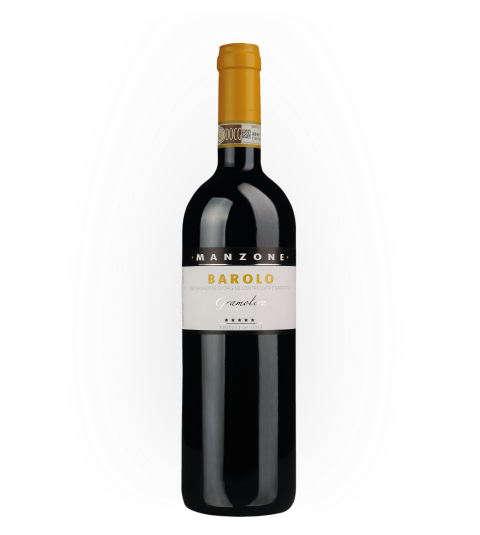
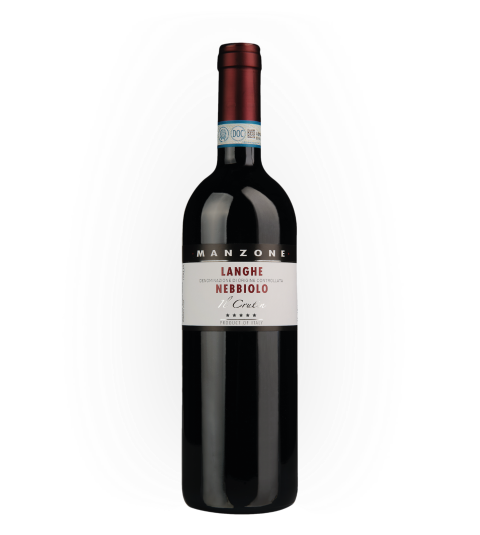
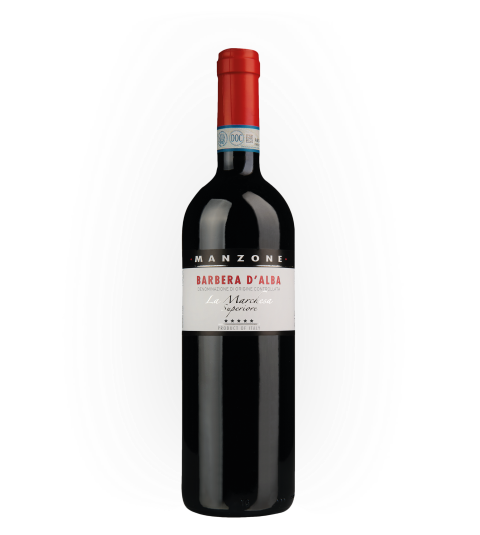
A chart treats Barolo as a whole. A bottle comes from a place. Gramolere, Castelletto, Il Crutin and La Marchesa each carry their own identity, shaped by soil, elevation, exposure and vine age. Even within the same village, the differences can be profound.
This is why the most useful question is not simply, “Is this a good vintage?” It is, “How did this vineyard express this vintage?” In a warm year, a site known for freshness may achieve exceptional balance. In a cooler season, a protected exposure may bring the necessary ripeness and depth. The answer changes from one parcel to the next.
The producer’s philosophy matters equally. Wines made with respectful viticulture and non-intervention in the cellar do not attempt to conceal the season. They preserve it. That can mean a more individual wine, and occasionally a less uniform one, but it also offers something rarer: a truthful record of land and year.
How to Buy and Cellar by Vintage
If you are buying Barolo to drink within the next five to eight years, look towards vintages with generosity and approachable texture, while still choosing producers whose wines retain freshness. If your aim is a longer cellar, seek years known for balance, structure and aromatic definition, then give the bottles the quiet time they require.
Condition is as important as the vintage itself. Purchase from a reliable source, store bottles on their side in a cool, dark place with a stable temperature, and avoid moving them unnecessarily. A great Barolo poorly stored is no longer the same wine.
When opening a mature bottle, allow it time. Remove the cork carefully, taste before decanting and let the wine unfold at its own pace. Younger, structured years may benefit from a longer decant, but there is no fixed rule. Nebbiolo rewards attention.
A vintage chart should lead you towards better questions, not simpler answers. Choose the year that suits your cellar, then choose the vineyard and family behind the label. In Barolo, the most memorable bottles are seldom just products of a fine season. They are the lasting conversation between a particular hill, a particular harvest and the people who have cared for both.