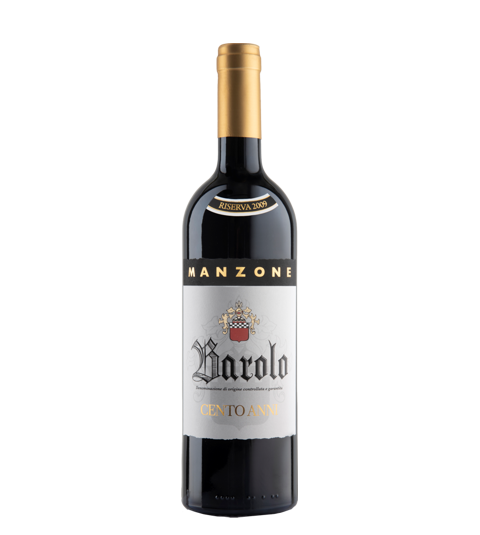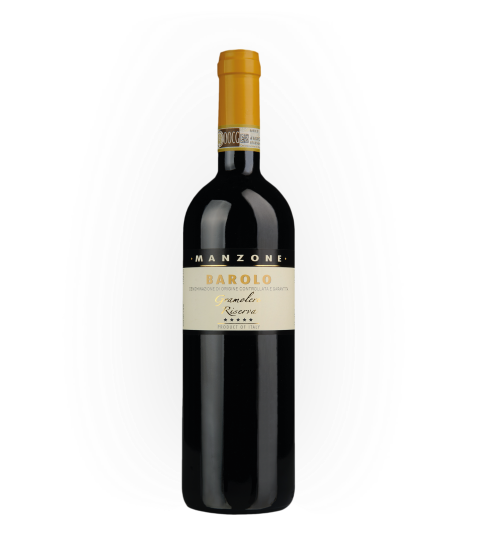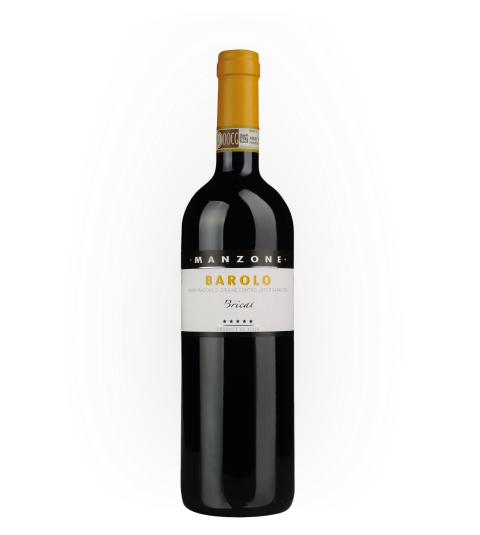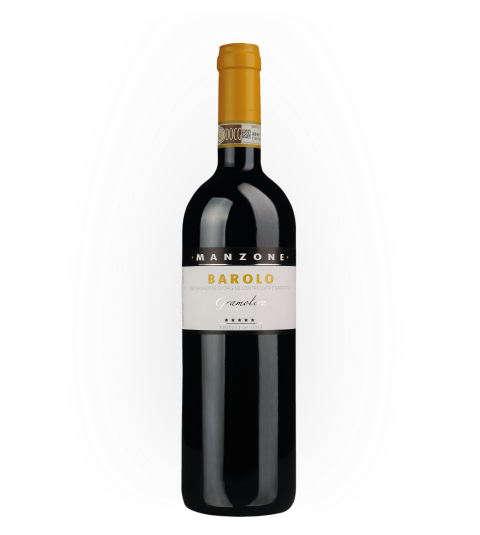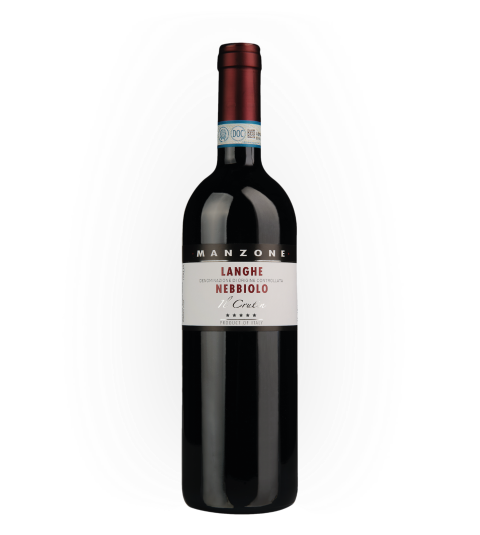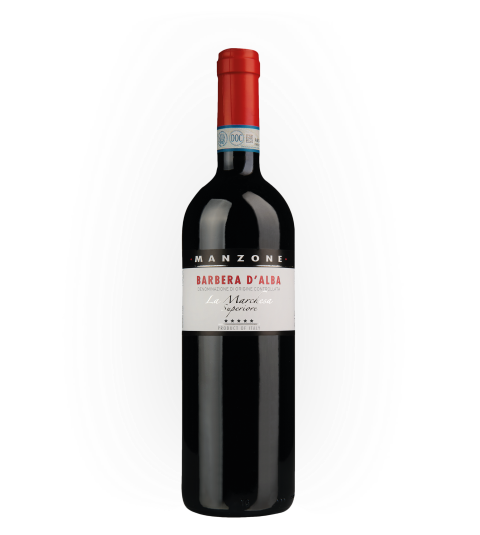
Barolo rarely gives everything away at first pour. Its reserve can be mistaken for severity, particularly when the bottle is young or served too warm. To understand how to taste Barolo properly is to give Nebbiolo the conditions, time and attention it asks for. In return, it reveals one of Piedmont’s most distinctive expressions of place: fragrant, structured, long-lived and deeply personal.
A fine Barolo is not judged by immediate softness alone. Its beauty often lies in the tension between perfume and tannin, brightness and depth, tradition and the singular character of a hillside. Taste it slowly. Let the glass change.
Begin with the right conditions
Serve Barolo at around 16-18°C. This is slightly cooler than many dining rooms and far cooler than the traditional idea of “room temperature”. At 20°C or above, alcohol can appear more pronounced and the wine’s precise floral and red-fruited notes may seem obscured. Too cold, however, and its perfume closes while the tannins feel harder than they truly are.
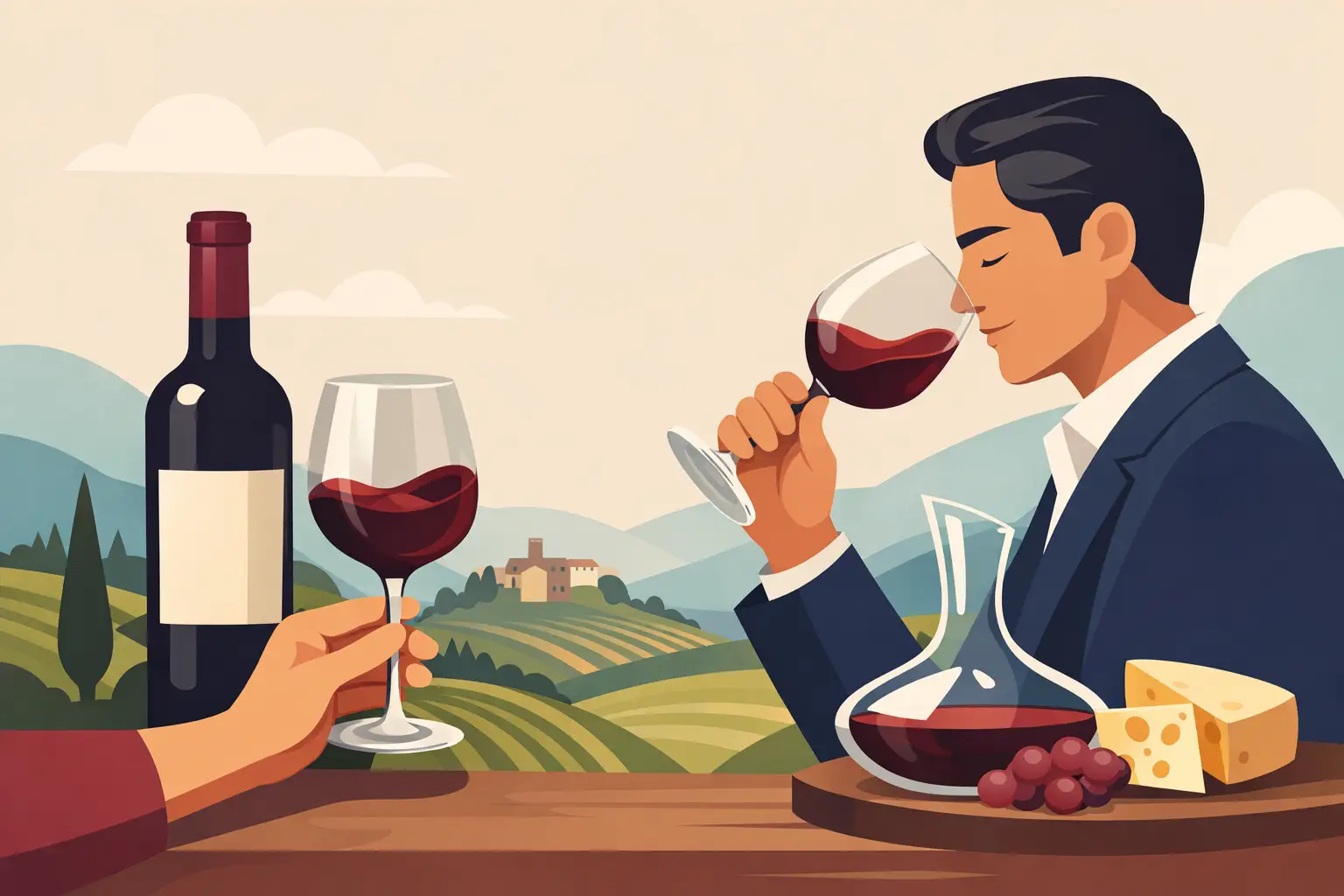
A large, tulip-shaped wine glass is the best choice. Barolo needs room for its aromas to gather and rise. A narrow glass can make the wine seem more austere; a generous bowl gives its layers space to develop. Fill it only to the widest point of the bowl, leaving enough air above the wine to capture its scent.
The bottle’s age matters. A recently released Barolo can benefit from a measured decant, often one to two hours, especially if it has been stored in cool, still conditions. Decanting is not a ritual performed for its own sake. It introduces oxygen, helping a young wine move beyond its first closed or earthy phase. For mature bottles, use more restraint. Stand the bottle upright in advance if possible, pour carefully to leave sediment behind, and allow the wine to open in the glass rather than exposing it to too much air at once.
How to taste Barolo properly, step by step
Start with the colour. Hold the glass against a pale background and look at the rim as well as the centre. Barolo is often less deeply coloured than people expect from a wine of such force. In youth, it commonly shows a luminous garnet-red with ruby reflections. With age, it moves towards brick, amber and orange at the edge.
Colour is not a measure of quality, but it offers context. Nebbiolo’s naturally modest pigmentation is part of its identity. A pale, transparent appearance can sit alongside great concentration, firm structure and decades of ageing potential.
Then nose the wine without swirling. Your first impression may be restrained: dried rose, violet, red cherry, blood orange, wild strawberry or a stony note that recalls the dust of a dry path in the Langhe. These opening aromas are often delicate, and worth noticing before the glass is disturbed.
Now swirl gently and smell again. The range should broaden. Depending on site, vintage and age, you may find liquorice, tea leaf, aniseed, tobacco, leather, truffle, woodland floor, balsamic herbs or warm spice. Do not search for every recognised descriptor. The more useful question is whether the aromas feel clear, layered and connected to one another.
Take a modest sip and let it travel across the palate. Barolo is built on three defining elements: fragrance, acidity and tannin. The fruit may be red rather than dark, but it is rarely simple. The acidity brings lift and precision. The tannins provide shape, drying the gums and giving the wine its renowned capacity to age.
Rather than asking whether the tannins are soft, ask whether they are ripe and integrated. Fine Barolo can be firm without being coarse. In a young bottle, tannin may feel tightly woven through the fruit. In a mature wine, it becomes silkier, yet still gives the palate a sense of line and length.
Pause after swallowing. The finish is where Barolo often declares its class. The flavours should not fall away quickly. Look for persistence, freshness and a return of perfume. A great glass may leave impressions of rose, savoury spice, red fruit and mineral tension long after the wine has gone.
Read the vineyard, not just the label
Barolo is a denomination of exceptional variation. Its communes, slopes, soils and exposures all shape the character of the wine. There is no single correct flavour profile, and that is part of the pleasure.
Wines from Monforte d’Alba are often recognised for their depth, structure and compelling ability to age, though every vineyard has its own voice. Gramolere, Castelletto, Il Crutin and La Marchesa, for example, are not interchangeable names. Each site carries differences of elevation, soil composition, aspect and microclimate that become visible in the glass through perfume, tannin, texture and pace.
This is why comparing two Barolos side by side can be so revealing. Keep the serving conditions the same and taste quietly, without rushing to decide which is “better”. One may offer lifted florals and fine-grained restraint; another may be broader, darker in tone or more firmly structured. The point is not to reduce terroir to a score. It is to recognise personality.
At Manzone Giovanni, the family’s historic holdings in Monforte d’Alba are approached with respect for this distinction. In the cellar, the philosophy of non-intervention allows each vineyard and vintage to remain present, rather than smoothing those differences into a single house style.
Young Barolo and mature Barolo ask different questions
A Barolo in its first years may be impressive but not fully expressive. Its aromas can be primary and tightly held, while acidity and tannin stand in the foreground. This does not mean the wine lacks generosity. It means its energy is still gathering itself.
For a young Barolo, focus on structure and promise. Is there purity of fruit beneath the tannin? Does the wine retain freshness? Are its aromas beginning to suggest complexity rather than simply oak or alcohol? A decanter and a substantial meal can make a young bottle more approachable, but they cannot replace the quiet transformation of bottle age.
With maturity, Barolo becomes less about power and more about nuance. The fruit shifts towards dried cherry, plum skin and orange peel. Floral notes may become more ethereal. Earth, truffle, tobacco and tea can emerge, while the once-firm tannin softens into texture. Mature bottles are not necessarily better than young ones. They offer a different form of pleasure: less direct, more reflective.
Storage has a decisive influence. A bottle kept in a cool, dark, stable place has the best chance of ageing gracefully. Poor storage can flatten aroma, dry the palate and make even an excellent wine appear tired. When opening an older Barolo, expect variation. That uncertainty is part of drinking a living wine.
Taste Barolo at the table
Barolo becomes more complete with food, particularly when the dish respects its structure. Rich, slow-cooked meats, game, mushroom dishes, truffle, aged cheeses and pasta with ragù all give its acidity and tannin something to work with. The wine refreshes the palate rather than simply sitting beside the plate.
Avoid food that is aggressively sweet, heavily chilled or dominated by hot chilli. These can make tannin feel harsher and diminish the wine’s aromatic detail. Salt, fat, umami and savoury depth are more sympathetic partners.
The pace of the meal also matters. Pour a little, then return to the glass after a course or a conversation. Barolo often becomes more articulate over an hour or two. A wine that appeared guarded at the start may show rose petal and spice later; one that seemed broad may tighten into a more precise shape as it settles.
Trust your own palate
Technical knowledge can sharpen attention, but it should never turn tasting into an examination. You do not need to identify every aroma to understand Barolo. Begin with what you genuinely perceive: a floral lift, a dry grip, a feeling of freshness, a long savoury finish. With repeated tasting, the language will follow.
If a bottle seems closed, do not dismiss it. Cover the glass with your hand for a moment, swirl lightly and return after ten minutes. If the tannins feel severe, try it with food. If the wine feels too warm, cool the bottle briefly and taste again. Small adjustments can change the whole experience.
The best way to taste Barolo is to leave room for its evolution. Give it a proper glass, a little air and an unhurried table. Then let the vineyard speak in its own time.